By Sbongile Sokela
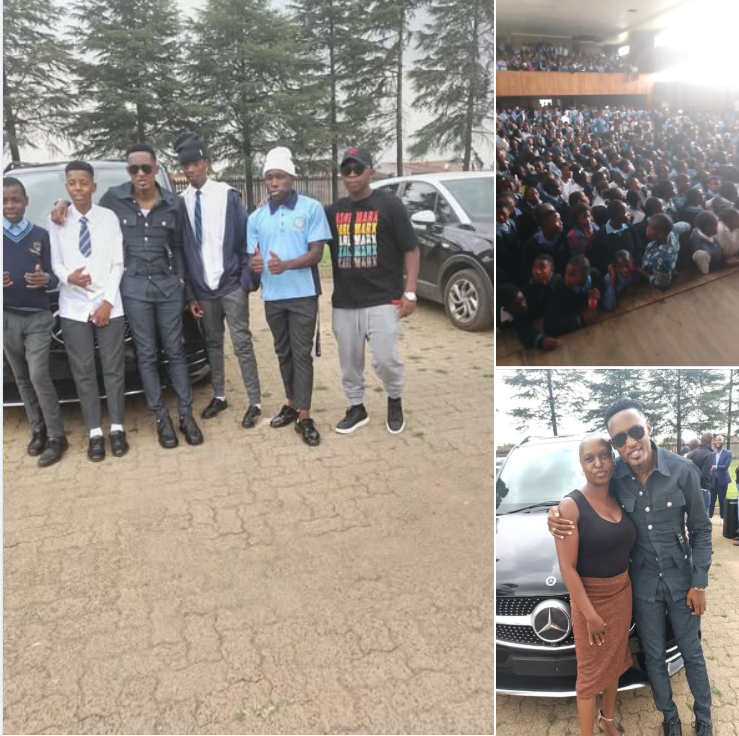
On 28 January 2026, the school visit and Back to School Campaign of the Afrika Mayibuye Youth Movement, led by its President, Keamogetswe Masike, together with Skeem GP, took place as a deliberate political and educational intervention aimed at motivating and encouraging young people and learners to take their education, leadership, and future seriously.
Beyond motivation, the programme fundamentally seeks to establish the Mayibuye Learners Movement in high schools. This initiative is informed by the reality that learners are not merely recipients of education policy, but are directly affected by systemic failures such as overcrowded classrooms, collapsing infrastructure, unsafe scholar transport, under-resourced schools, and the erosion of learner dignity in working-class communities.
The Mayibuye Learners Movement is intended to organise learners into a conscious, disciplined, and principled formation that can articulate their lived experiences, defend their rights, promote academic excellence, and cultivate a generation of politically aware young people who understand the structural causes of inequality in education. It will serve as a platform to develop leadership, encourage civic responsibility, and ensure that learner voices are not marginalised in decisions that affect their futures.
This programme is therefore not symbolic, nor a once-off visit, but part of a broader strategy to build sustainable learner organisation across the country, restore dignity in public schooling, and contribute to the long-term struggle for social justice and the total emancipation of the youth.
Speaking during the visit, Keamogetswe Masike, President of the Afrika Mayibuye Youth Movement, said the campaign’s success would not be judged by appearances. “The success of the Back to School Campaign will not be measured through optics. Instead, we measure impact through organisation, continuity, and material change. Our benchmarks include the establishment and sustainability of Mayibuye Learners Movement structures within schools; the development of learner leadership committees that are active, disciplined, and politically conscious; and the ability of learners to collectively articulate and escalate challenges affecting their education, including infrastructure decay, overcrowding, safety, and access to learning resources.”
Masike also explained that the choice of Lefa Efa Secondary School was intentional and strategic. “Lefa Efa Secondary School was not chosen by coincidence, convenience, or public relations considerations. It represents the material conditions faced by the majority of working-class schools in Kwa-Thema and across the country. It reflects both the challenges and the resilience of township public education. Our movement deliberately prioritises schools rooted in working-class communities because that is where educational inequality is most visible and most violently reproduced. Lefa Efa stands as a strategic entry point to engage learners who are directly affected by systemic neglect, underinvestment, and structural exclusion, while also recognising the school’s potential as a centre of learner leadership and organisation. At Lefa Efa Secondary School, learners are expected to pursue excellence under conditions that actively undermine their dignity and right to quality education.”
He further highlighted the dire conditions facing learners at the school. “The state of sanitation is unacceptable toilets are dysfunctional, unhygienic, and unsafe, particularly for young women learners, reflecting a broader failure to treat working-class children as worthy of basic human dignity. The school hall, a critical space for assemblies, cultural activities, examinations, and learner development, is dysfunctional, depriving learners of a communal and educational facility that should serve as a centre of intellectual and social life. This absence limits both academic support programmes and extracurricular development, further narrowing opportunities for learners who already face structural disadvantages.”
Masike added that the challenges faced by learners extend beyond the school gates. “Most learners at Lefa Efa come from deeply impoverished households, where unemployment, food insecurity, and overcrowded living conditions are everyday realities. What is happening at Lefa Efa is not an isolated failure; it is a microcosm of systemic neglect of township schools. It exposes an education system that speaks the language of policy while ignoring lived conditions on the ground. This is precisely why learner organisation is critical because without organised learner voices, these injustices remain normalised, invisible, and unresolved.”