By Sbongile Sokela and Palesa Ndinisa
Commemorating the United Nations’ International Day of Awareness of Food Loss and Waste, the Consumer Goods Council of South Africa (CGCSA) held a seminar at Protea Hotel O.R Tambo, Kempton Park, on Monday, the 29th of September 2025.
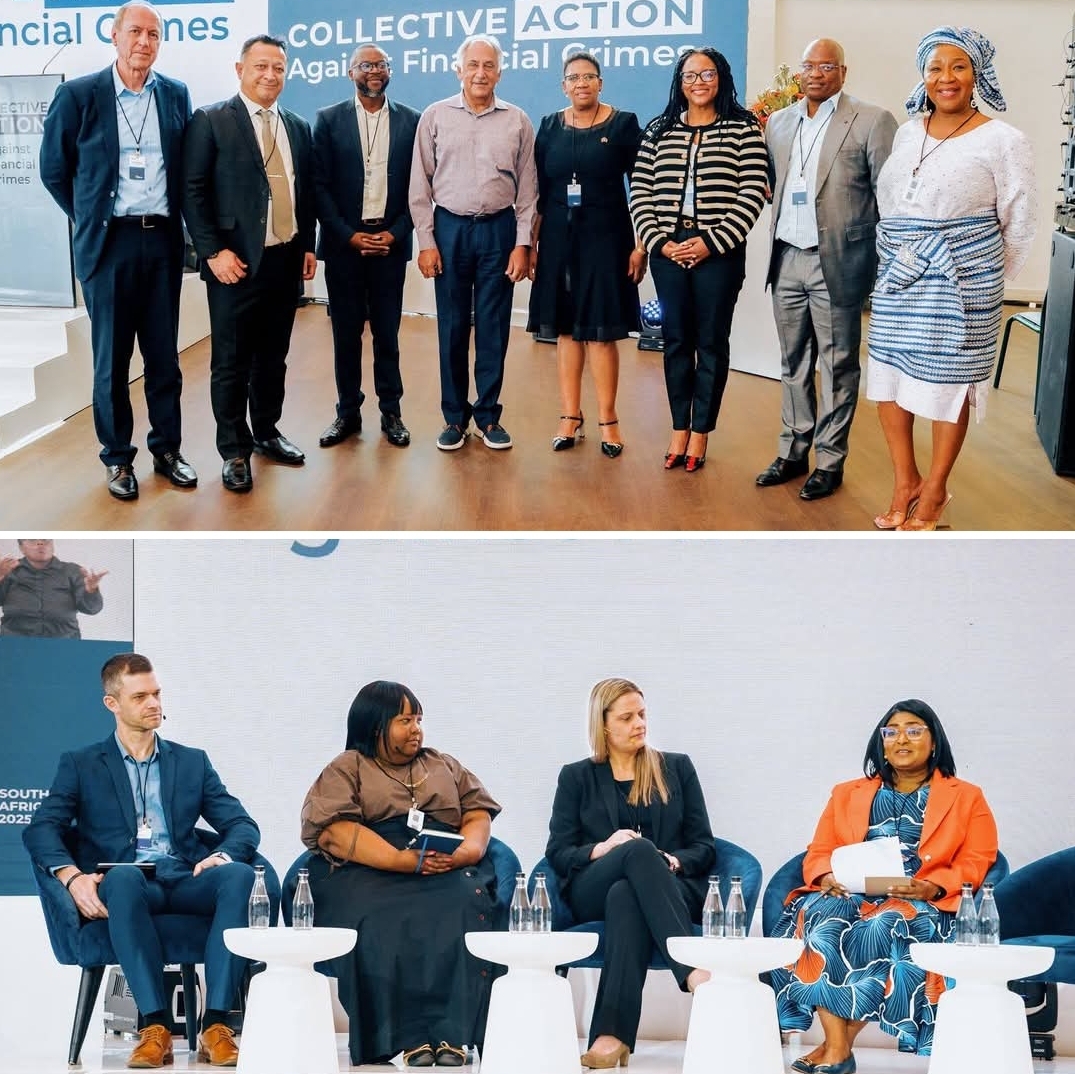
The seminar was directed by Kylen Plasket-Govender, serving as SA FLWI Communications Specialist of CGCSA. The event was chaired by the prominent Vuyiswa Ramokgopa, who serves as the MEC for Department of Agriculture and Rural Development in Gauteng. The MEC gave an educational keynote speech about the importance of food sustainability and disadvantages of food waste. The panel discussion The programme was directed by Kylen Plasket-Govender, serving as SA FLWI Communications Specialist of CGCSA. On the agenda, a panel discussion was held and facilitated by Matlou Setati, Food Safety & Sustainability Initiative Executive, CGCSA. Part of the panel discussion was Professor Lise Korsten from the University of Pretoria (UP), Kgauta Mokoena who serves as Chief Director for the Waste Management: Department of Forestry, Fisheries and the Environment (DFFE), John Eaglesham from Waste & Resources Action Programme (WRAP), Nicole Roos- Chairperson & Managing Director for East & Southern Africa for Nestlè & CGCSA Board Member and lastly, Dr. Taahira Goga, Council for Scientific and Industrial Research (CSIR).
Professor Lise Korsten from the University of Pretoria emphasised the importance of analysing and capturing inherent traditional knowledge, particularly from the informal sector, regarding food safety. “It is a crisis that with enough political will and with the caliber and quality of leadership that I see in this room, challenge that we can leave in this generation.” She also highlighted the need to retain and effectively integrate this knowledge into existing systems. The presentation made by professor suggested revisiting and updating the food safety authority models previously developed for South Africa to determine their current fit-for-purpose and to ensure African scientists contribute their perspective on global platforms like OECD and Codex. “And we should make sure that our scientists are sitting on these initiatives where we can give an African perspective on OECD and Codex platforms, where our science goes in there and we are part of the global change.”
South Africa’s unique divergent economy, encompassing both formal and informal sectors, is highlighted as a strategic advantage. “We’re the only country in the world that’s got this unique divergent economy between formal and informal. And that should be our bargaining chip because everyone wants to work with us now because they want to understand that better so that they can use it in their own countries to better their own system so we can play a leading role and be part of this food security, food safety indexes.”
The CGSA’s Food Loss and Waste Initiative aims to halve food loss and waste across the food value chain by 2030. The initiative prioritises preventing waste and, secondly, redistributing surplus, safe, and nutritious food to those in need. Linda Drummond from CGSA emphasised the role of celebrating successes and outlining future plans for food loss and waste reduction, stating that collective effort from everyone present is crucial to making a significant difference in this area.
MEC for Agriculture and Rural Development in Gauteng, Vuyiswa Ramokgopa expressed concern and optimism in her keynote speech. “It is estimated that 68% of food is wasted between the producer and retailer section. A small 18% is estimated to be at household waste. This is why we as the Department of Agriculture feel we have a critical role to play in helping to address this problem. We need to engage with those who are involved at a production stage in logistics to handling of farmers to retailers. We understand there is also household waste, we need to address the sustainer issue. We need to reevaluate every link in the agricultural chain,” added MEC Ramokgopa. In addition, the MEC highlighted how crucial it is to ensure that a country like South Africa, particularly struggling from socioeconomic issues, has a task to fulfil in order to thrive. “Food is fuel,” expressed the hopeful MEC.
The panel engaged with guests using their researched knowledge and shared their insights according to their respective departments as well as occupations.
Photos Credit: 39PICTURES PTY LTD